 Aeronautics
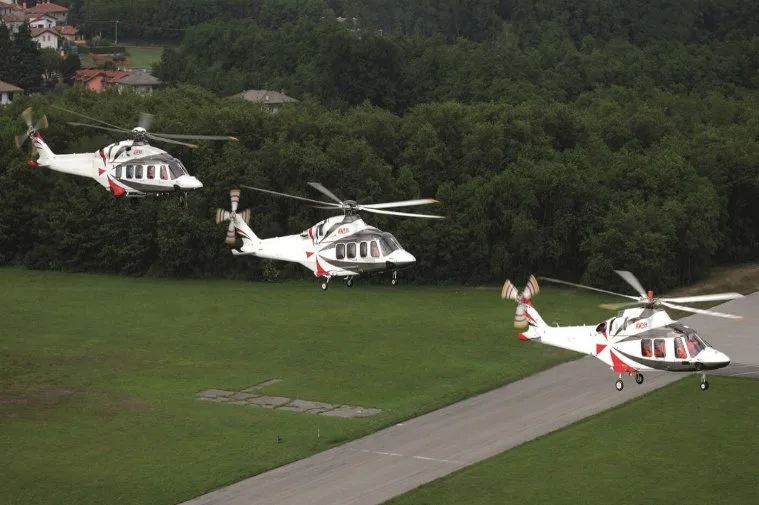
AW09 – Certification program
Leonardo AW09
- Hypermesh
- Optistruct
- Hyperview
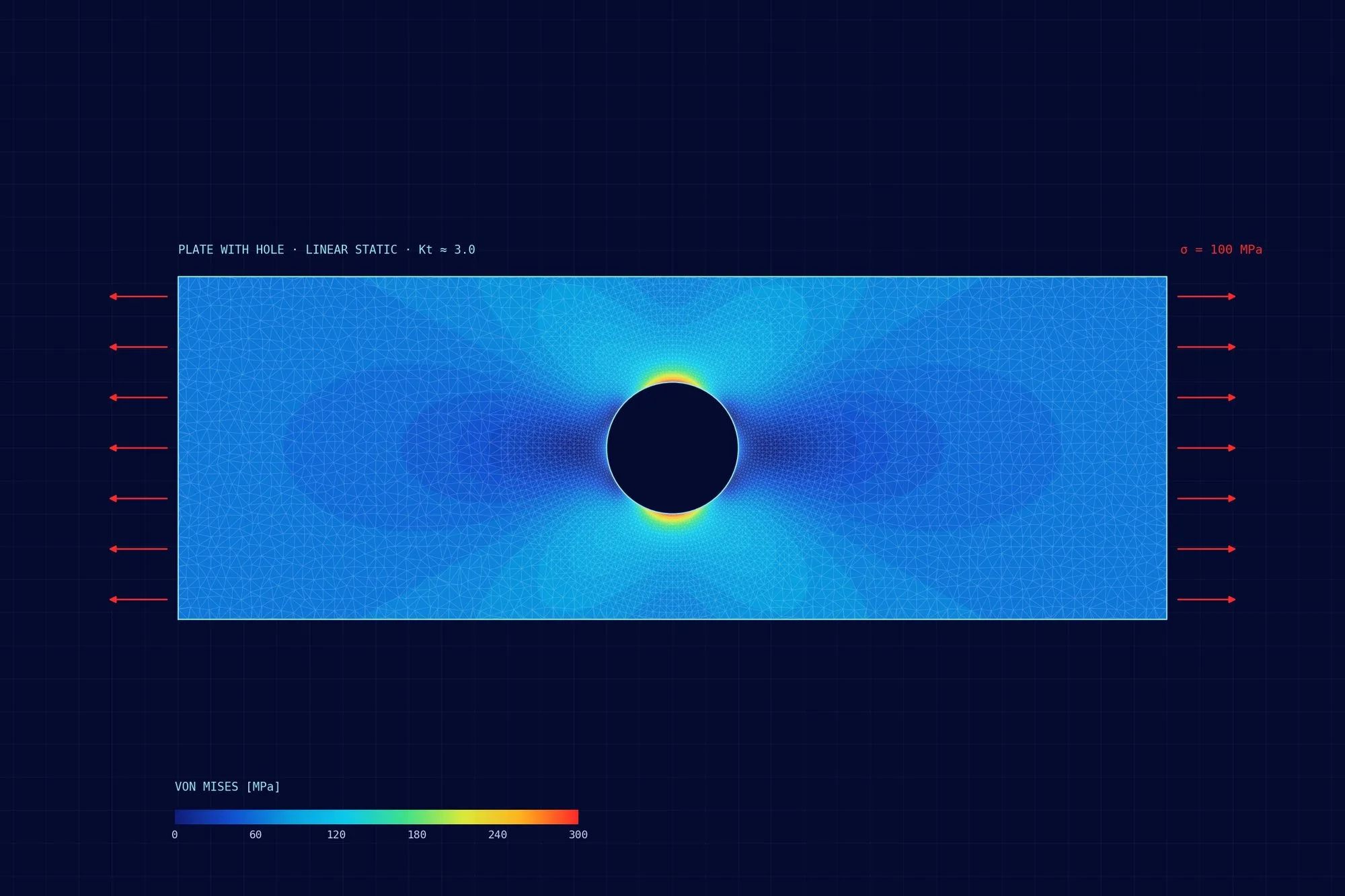
FEM simulations, based on the finite element method, let us predict how a structure will behave before it is built. As a result, components get lighter, prototypes are fewer and tests bring fewer surprises.
A global FE model represents the whole structure with relatively large elements. In fact, it shows how loads spread and which forces reach each component. The detailed model, instead, applies those forces to a smaller area with a fine mesh, to read stresses accurately around holes, fillets and attachments.
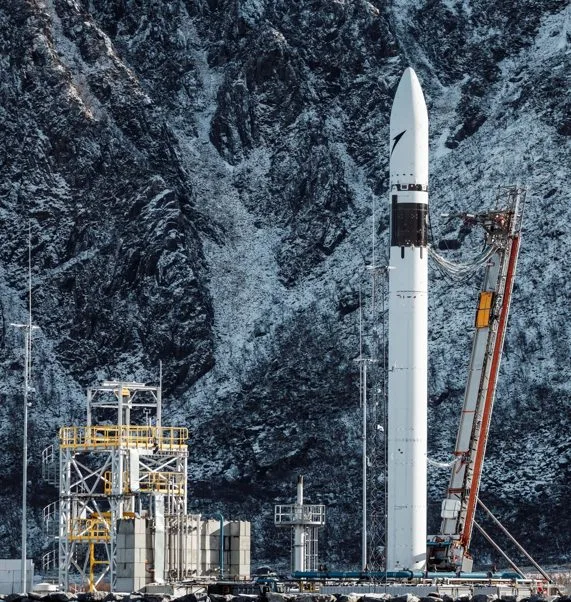
We build both in HyperMesh, with element quality checks and load balance verifications. Then we solve them with OptiStruct and MSC Nastran. For example, the global model built for ISAR MGSE made it possible to size the transporter, lifting system and launch table together.
Aircraft structures fail more often through fatigue than through a single overload. To assess it, therefore, you need to know how stresses at a critical point respond to loads that vary over time. The Transfer Function links external loads to local stresses.
Once defined on the FE model, it makes it possible to calculate fatigue life over thousands of flight conditions without rerunning the full analysis. This is also the work we carried out on the AW09 programme.
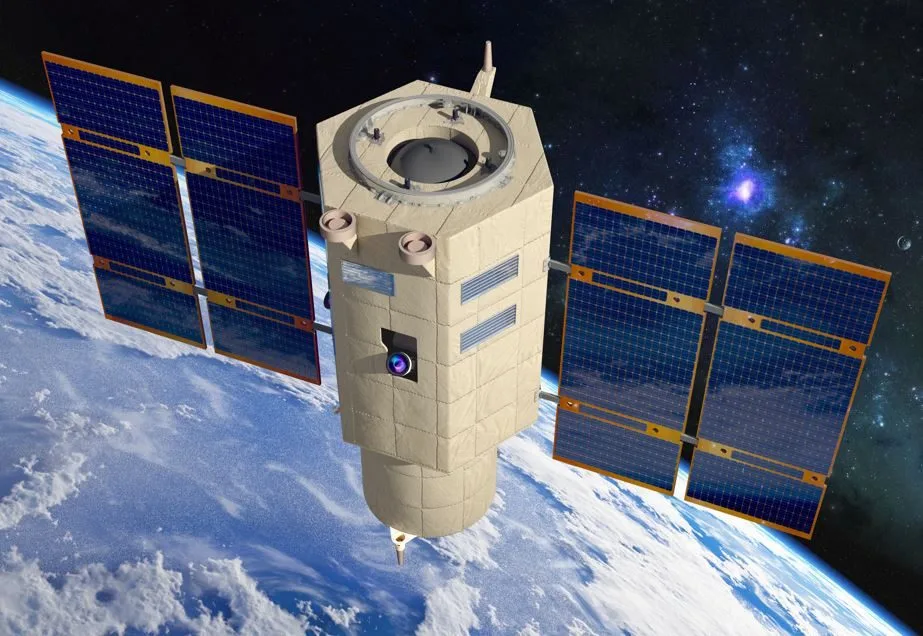
In orbit a satellite moves from sunlight to the Earth’s shadow several times a day. As a result, temperature swings distort the structure and can misalign instruments and panels. With thermoelastic FEM simulations we calculate deformations and stresses from temperature maps, as in the work done for OHB in the Genesis Program.
The results of FEM simulations then feed structural verification and test planning. You will find an example on the ISAR MGSE page.
Aeronautics Aeronautics
 Space
 Space
They are numerical analyses that divide a structure into many small elements and calculate their deformation and stress under load. As a result, you can verify a component before you manufacture and test it.
HyperMesh to build models, OptiStruct and MSC Nastran as solvers, HyperView for post-processing.
The global model shows how loads are distributed across the whole structure. The detailed model, instead, receives those loads and calculates stresses accurately in a critical area, such as an attachment or a hole.
It is the relationship between external loads and the stress at a critical point. Once defined on the FE model, it makes it possible to calculate fatigue life over many load conditions.
Yes. In the Genesis Program for OHB we performed structural analyses to assess the satellite's behaviour under extreme thermoelastic loads.
We respect your privacy
We use technical cookies that the website needs to work and, only with your consent, statistics and marketing cookies (Google, LinkedIn, Meta) to understand how the site is used and to measure our campaigns. You can change your mind at any time. Cookie policy